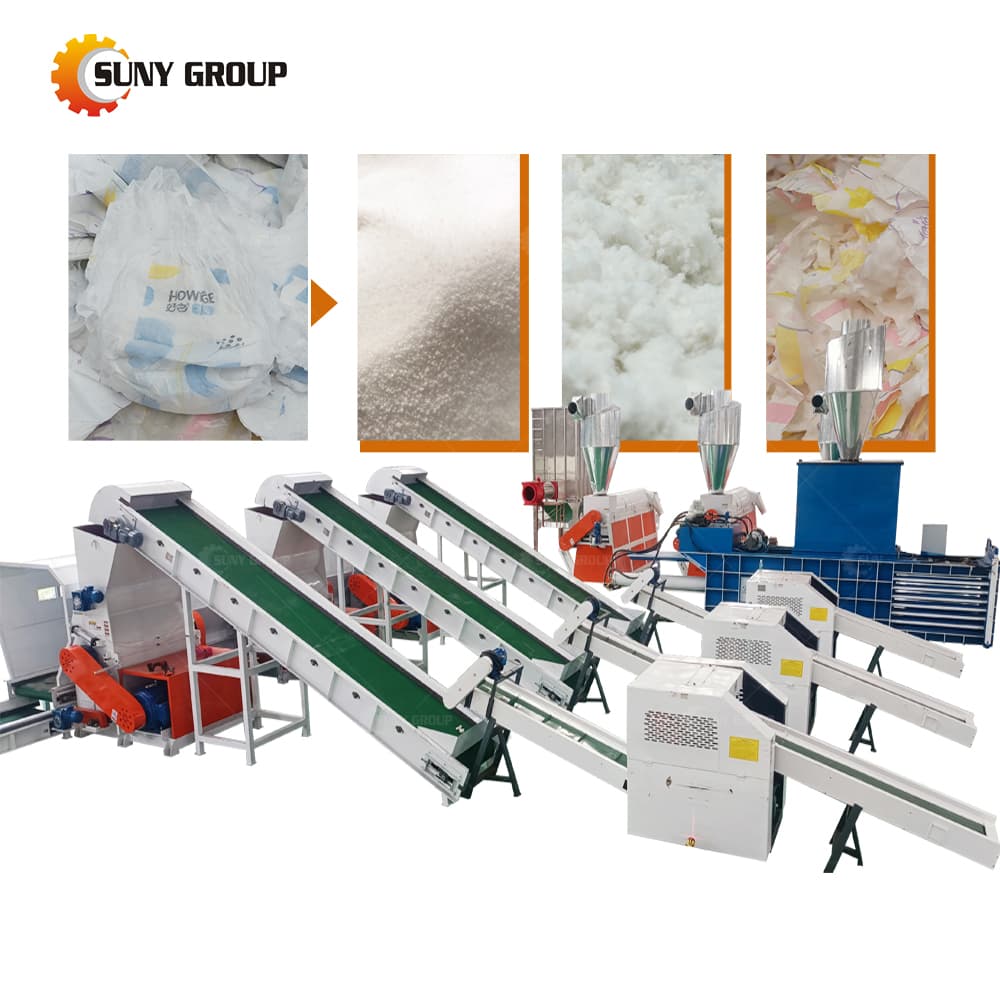
Recovering fluff pulp and Super Absorbent Polymer (SAP) from waste baby diapers requires specialized mechanical shredding and separation technology. This is particularly relevant for unused and defective diapers generated during manufacturing, quality control, product changes, or inventory management. Unlike post-consumer diapers, these post-industrial materials are generally cleaner and can be processed through a dry mechanical recycling system designed to recover valuable components without intensive washing or wet treatment.
A baby diaper is a composite product made up of several materials, including fluff pulp, SAP, polyethylene (PE) or polypropylene (PP) films, nonwoven materials, adhesives, and elastic components. Among these, fluff pulp and SAP are two of the most important materials in the absorbent core. Fluff pulp provides the fibrous structure that distributes liquid, while SAP is designed to absorb and retain large amounts of liquid. Recovering these materials can therefore turn defective or unused diapers from a disposal cost into valuable secondary resources, while the plastic fraction can also be collected for further recycling.
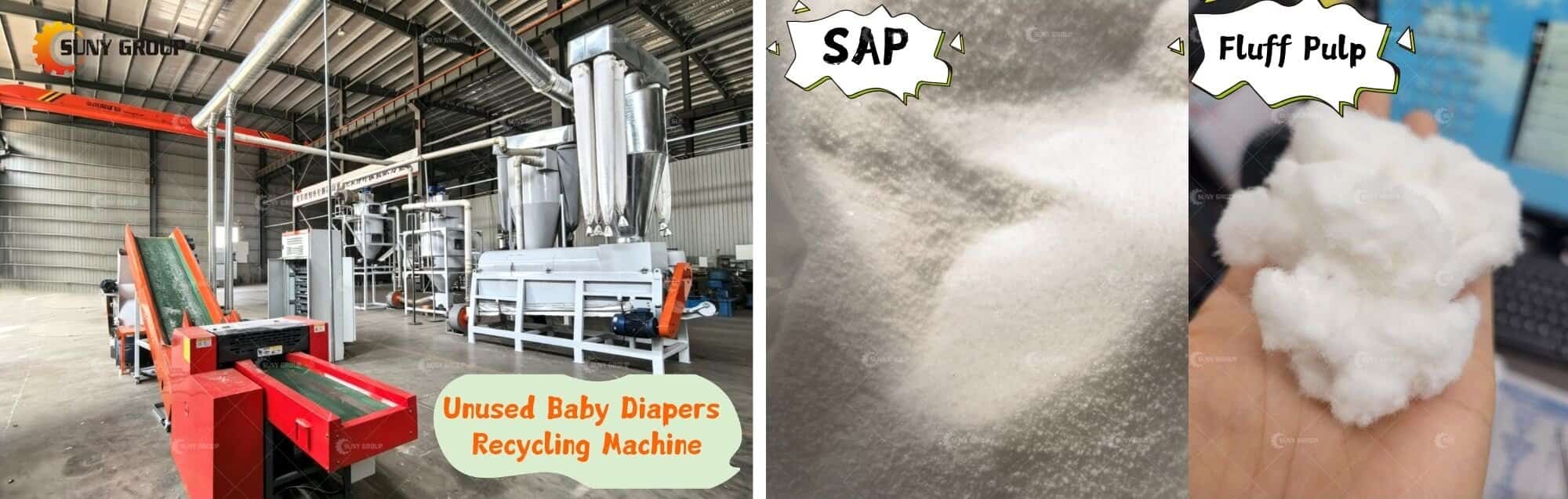 Recycling Machine for Unused Baby Diapers
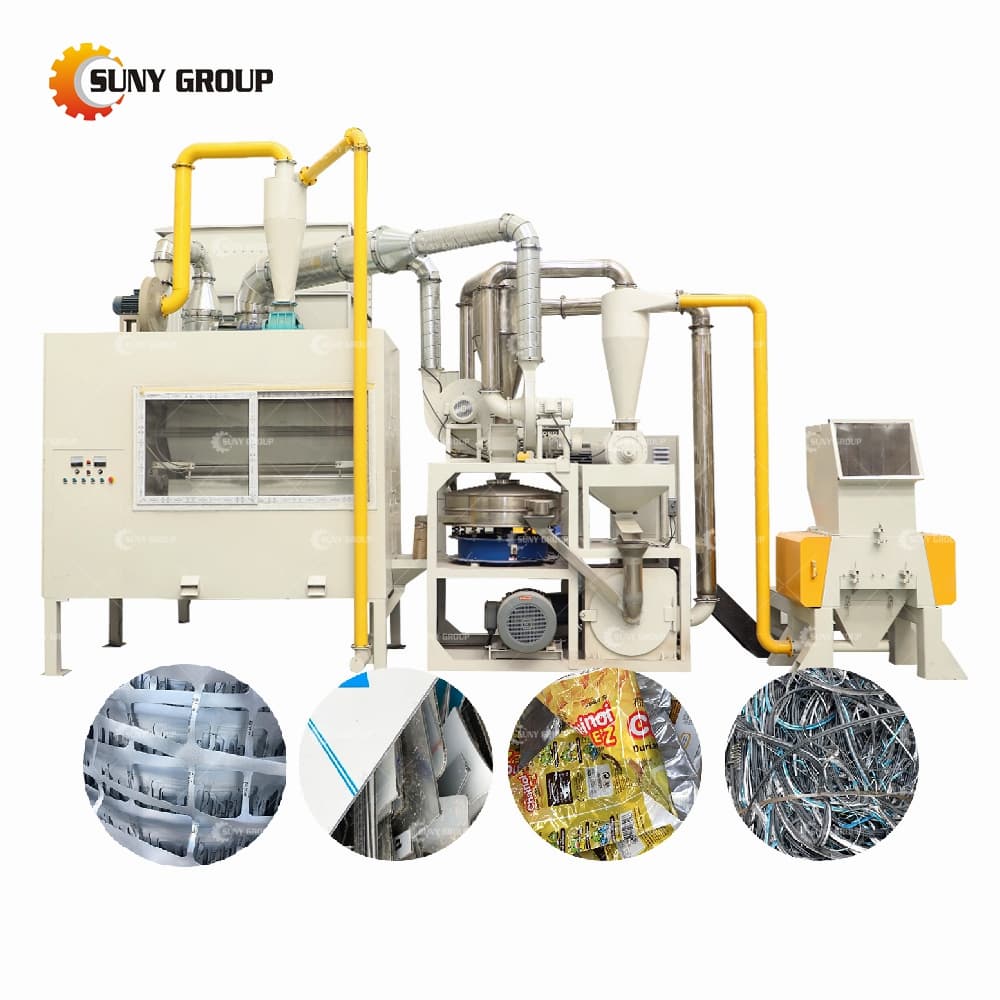
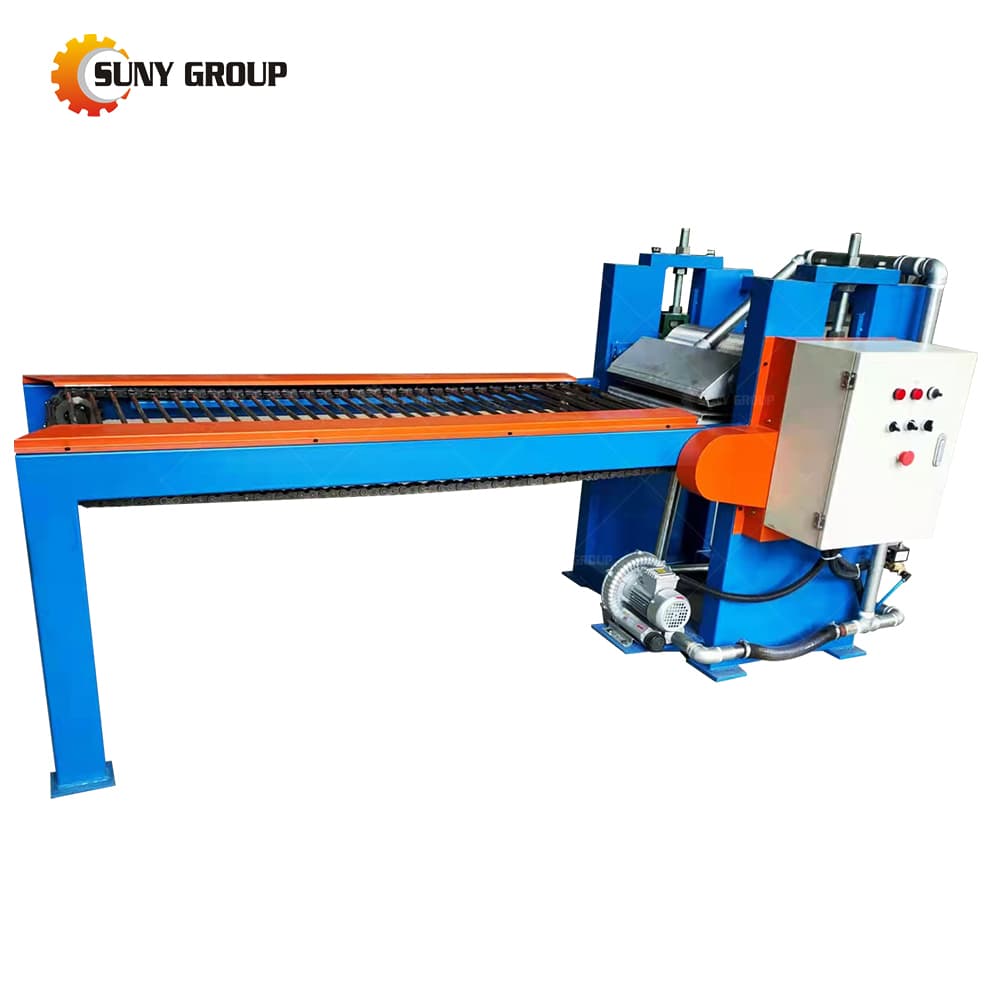
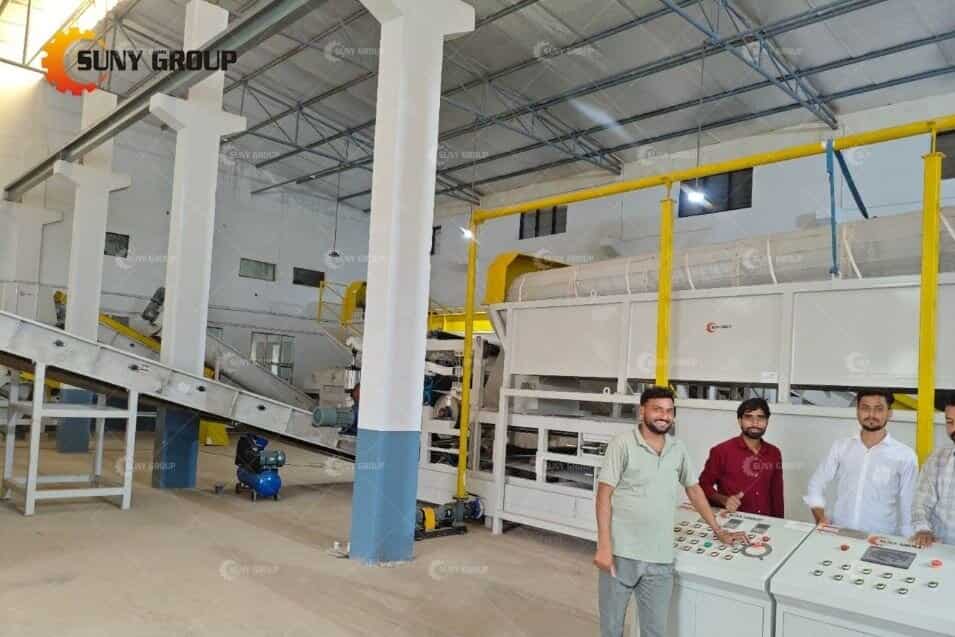
The recycling process starts with an even feeding system that delivers factory rejects, defective products, expired stock, or other unused diapers into the processing line. A screw conveyor and belt conveyor transport the material to a soft-material cutter or heavy-duty crusher, where the diapers are opened and reduced in size. The objective is to break apart the composite structure and release the absorbent core without excessively destroying the pulp fibers or creating unnecessary fines. After shredding, directional screening separates the loosened mixture into different material fractions, including fluff pulp, SAP, and plastic film.
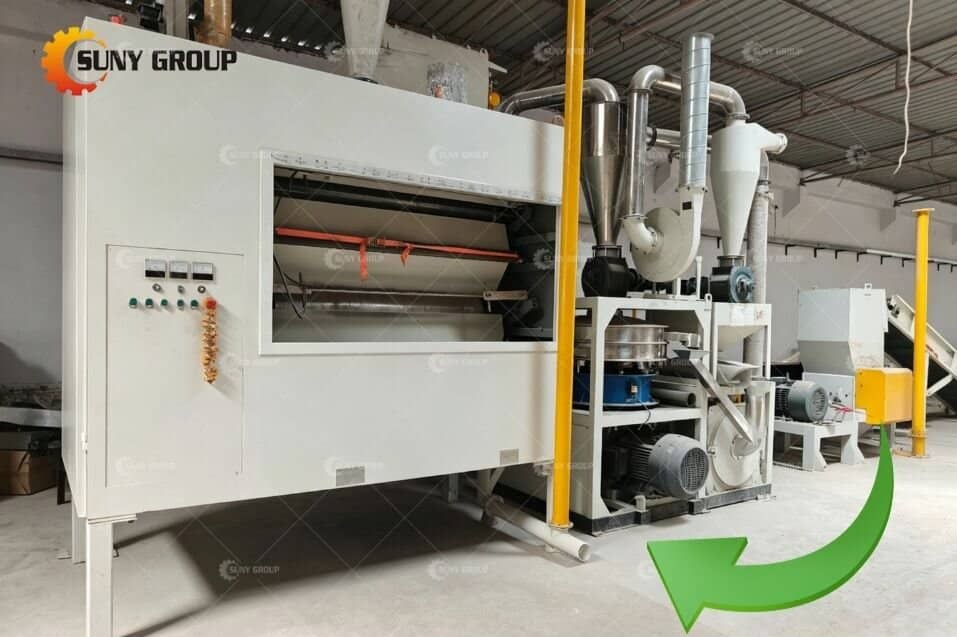
Further separation is used to improve the quality of each recovered fraction. A fluff pulp extractor combines controlled airflow with mechanical separation to remove and collect lightweight pulp fibers from the mixed material. The SAP-rich fraction is then processed through a dedicated polymer screening system to recover Super Absorbent Polymer according to particle size and material characteristics. Plastic films and other lightweight components are separated from the absorbent materials, while fans and cyclone dust collectors provide stable airflow, pneumatic conveying, and dust removal throughout the process. The exact equipment configuration can be adjusted according to the diaper structure, feedstock condition, required capacity, and desired purity of the recovered materials.
The purity and recovery rate of fluff pulp and SAP depend on several factors, including the composition of the incoming diapers, shredding intensity, particle-size distribution, screening accuracy, airflow control, and the degree of contamination between different material fractions. For unused and manufacturing-defective diapers, the relatively clean feedstock can provide favorable conditions for dry mechanical separation. A properly configured baby diaper recycling line can recover fluff pulp, SAP, and plastic materials as separate fractions, helping manufacturers and recyclers reduce waste, recover material value, and make better use of post-industrial diaper scrap.
👉 Contact Tel: +86 199 0388 6476
👉 Contact Email: sunyrecycle.zack@gmail.com
Welcome to visit SUNY GROUP website. If you want to learn more about our equipments, Contact us Now.
WhatsApp : 86-19903886476
Email : sunyrecycle.zack@gmail.com
Zhengzhou, Henan, China (Mainland)
We specializes in recycling machinery and solid waste treatment solutions, offering aluminum-plastic separation, paper-plastic recycling, diaper recycling, ACP panel stripping and more. We provide customized turnkey systems with raw material testing, installation, training, and strict quality control to ensure stable performance and high recovery rates for long-term customer value.


Provide customized solutions to meet customers' needs for different voltages, capacities, sizes, and appearances
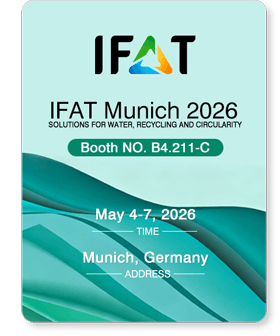
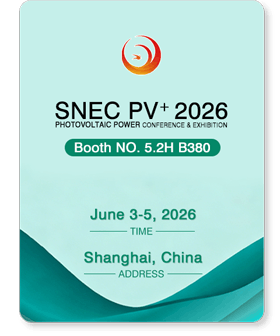
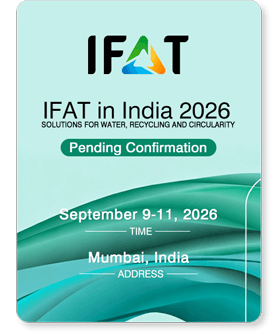
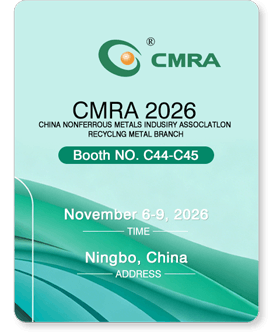
In 2026, we will participate in the following exhibitions and welcome customers to visit us!

Add: No. 401-406, Fifth Street, Jingbei Third Road, Economic and Technological Development Zone, Zhengzhou, Henan, China (Mainland)